Understanding Bell's Palsy
Bell's Palsy is typically diagnosed by a medical doctor, who may rule out other conditions and suggest medications such as corticosteroids, eye protection strategies, or referral to physiotherapy.
From a Traditional Chinese Medicine (TCM) perspective, Bell's Palsy is often related to:
- Wind-cold or wind-heat attacking the channels of the face
- Qi and blood not nourishing the facial muscles evenly
- Underlying deficiency that allows external factors to affect the nerve
Our treatments aim to move qi and blood along the affected channels, warm and nourish the face, and support the body's ability to heal.
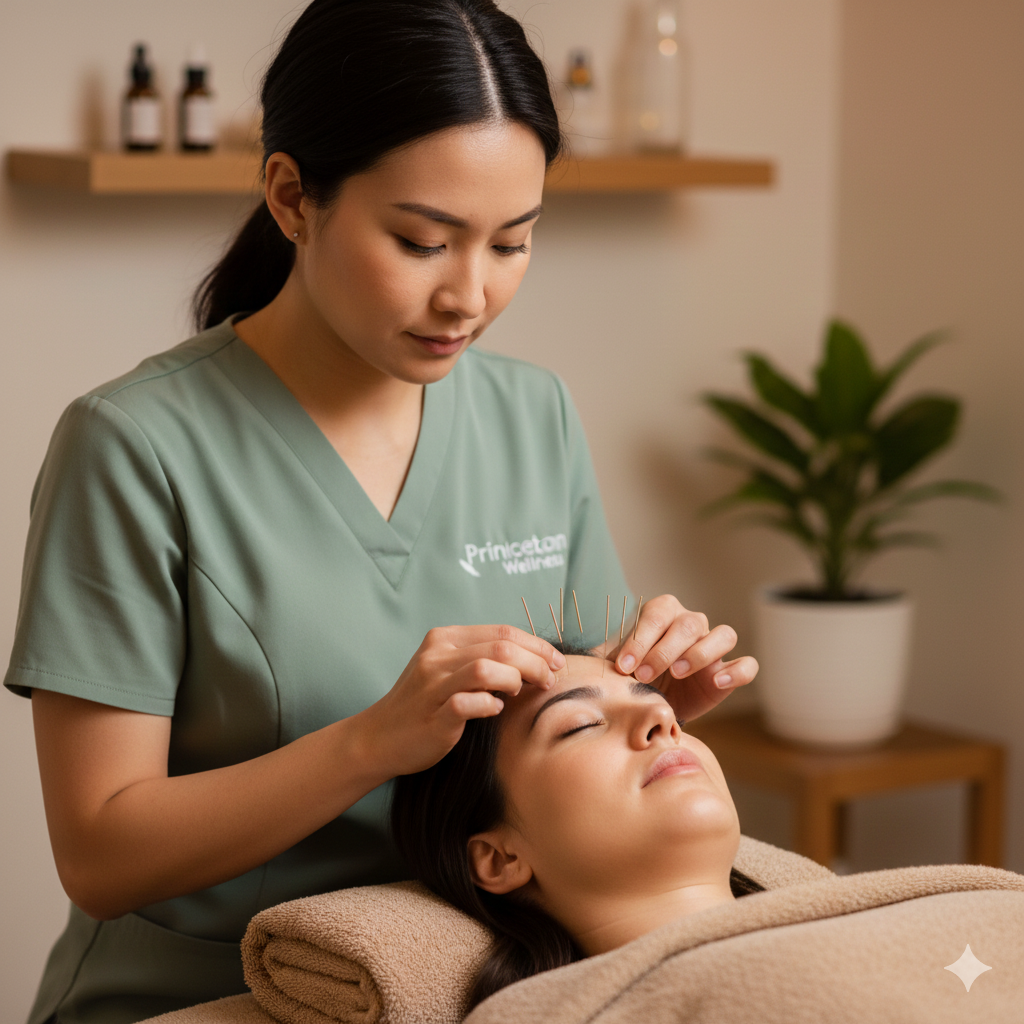
Acupuncture for Bell's Palsy
Acupuncture points are selected on the face and body to:
- Stimulate the facial nerve and affected muscles
- Improve local circulation and reduce swelling
- Regulate the nervous system and stress response
- Support overall qi and blood flow
Needles used on the face are very fine, and we adjust technique based on how recent or chronic your symptoms are.
Tuina & Gentle Facial Therapy
In addition to acupuncture, we may incorporate:
- Soft manual techniques along the jaw, cheek, and forehead
- Stimulation of key acupoints and muscle groups
- Stretching and relaxation of tight areas
- Guided facial exercises you can practice at home
The touch is always gentle and adapted to your comfort level.
Moxibustion & Heat Therapy
In some cases, your practitioner may recommend moxibustion (moxa) to:
- Warm and nourish the facial channels
- Help move qi and blood in areas that feel cold or tight
- Support the body's overall healing and recovery
Heat is used carefully and is always checked with you to keep it comfortable and safe.
When to Begin Treatment
Many people start complementary care:
- Within the first few weeks after onset (alongside medical treatment)
- After the acute phase, when they still have weakness or difficulty moving part of the face
- Months later, to address residual tightness, asymmetry, or spasms
Your practitioner will adjust the intensity and focus based on how long you have had symptoms.
Working with Your Doctor & Rehab Team
Our Bell's Palsy program is designed to sit alongside your conventional care. We always recommend that you:
- Have your condition assessed and diagnosed by a medical doctor
- Follow advice from your neurologist, family doctor, or emergency physician
- Use eye drops, patches, or other eye protection as recommended
- Inform us of medications or therapies you are currently receiving
We can coordinate with your healthcare providers when appropriate.
Possible Benefits Over Time
With a series of treatments, many clients notice:
- Improved ability to close the eye and raise the eyebrow
- Better mouth control when eating, speaking, or smiling
- Less facial stiffness, pulling, or twitching
- Greater overall comfort and confidence in expression
Results and timelines vary from person to person; we always discuss realistic expectations.
Your Bell's Palsy Treatment Journey
At our Princeton Avenue clinic in Richmond Hill, we provide one-on-one sessions tailored to your facial pattern, comfort level, and stage of recovery.
Detailed Assessment
We review your medical diagnosis, when symptoms started, current medications, and main challenges (eye closure, mouth movement, pain, etc.).
Personalized Treatment Plan
Your practitioner explains which acupuncture points, facial areas, and additional therapies (such as moxibustion or Tuina) will be used, and how often sessions are recommended.
Acupuncture & Facial Therapy
Each session may include body and facial acupuncture, gentle manual techniques, and targeted work on the affected side, with constant communication about comfort.
Home Exercises & Follow-Up
We provide simple facial exercises or self-massage techniques to practice at home and adjust your treatment plan based on your progress over time.
Receipts & Insurance
Bell's Palsy sessions are typically billed as acupuncture or massage therapy, depending on which type of practitioner provides your treatment.
We issue official receipts that you can submit to your extended health insurance if your plan covers these services. Coverage varies by provider; please check your individual policy.
How Supportive Acupuncture Care May Help During Bell's Palsy Recovery
Bell's Palsy is a condition that may cause sudden weakness or paralysis on one side of the face. Many people notice facial drooping, difficulty closing one eye, changes in smiling, and tightness or discomfort around the jaw and cheek. While some cases improve with time, early medical evaluation is important.
At Princeton Wellness Centre, we provide supportive Bell's Palsy care in Richmond Hill for people who want to explore acupuncture and related therapies as part of their broader recovery plan. Our approach may include acupuncture, Tuina, gentle facial therapy, and wellness guidance based on your presentation and comfort level.
Early medical attention comes first
Sudden facial weakness should be assessed by a licensed medical doctor as soon as possible, ideally within the first 72 hours. Bell's Palsy can sometimes resemble other urgent conditions. Our care is supportive and does not replace emergency, neurological, or physician-led treatment.
To learn more, read our blog: Bell’s Palsy: Why Early Medical Attention Matters and How Supportive Acupuncture Care May Help.
What supportive care at our clinic may include
Once you have received medical assessment, supportive care may help address tension, discomfort, and muscle coordination during recovery. Depending on your condition, treatment may focus on promoting circulation, easing muscle guarding, and supporting overall facial relaxation.
Acupuncture for Bell's Palsy
Gentle, individualized acupuncture may be used to support comfort, circulation, and facial muscle recovery. Treatment is adjusted based on symptom stage and tolerance.
Tuina & Gentle Facial Therapy
Manual therapy may help reduce tightness in the face, jaw, neck, and shoulders while encouraging a more balanced recovery pattern.
When people often seek Bell's Palsy support
Some clients visit shortly after diagnosis, while others come later because they still notice tightness, asymmetry, or incomplete facial control. We may also support clients who are looking for a gentle complementary approach alongside physician recommendations, home care, and rehab exercises.
Recovery planning is personalized
There is no single schedule that fits everyone. Some people begin with one or two sessions per week early on, while others may benefit from a slower pace depending on how long symptoms have been present. Your treatment plan can be adjusted over time based on progress, comfort, and overall recovery goals.
Serving Richmond Hill and nearby communities
Our clinic is located at 11 Princeton Ave, Richmond Hill, ON. We regularly welcome clients from Richmond Hill, Markham, Vaughan, Thornhill, Aurora, Newmarket, Scarborough, and nearby areas who are looking for acupuncture and wellness support in a calm, professional setting.
You can also explore our broader wellness services, including moxibustion, massage therapy, and osteopathy, depending on your recovery needs.
Common Questions About Bell's Palsy Supportive Care
Can acupuncture help with Bell's Palsy?
Acupuncture may help support some Bell's Palsy patients during recovery by addressing comfort, circulation, muscle tension, and facial movement. It should be viewed as supportive care and should not replace medical assessment or physician-guided treatment.
When should I seek medical attention for Bell's Palsy symptoms?
New facial weakness should be medically assessed as soon as possible, ideally within 72 hours. Early evaluation helps rule out other serious conditions and may affect treatment decisions.
How many sessions might be recommended?
Treatment frequency depends on how recent the symptoms are, how much facial weakness is present, and whether there is residual tightness or asymmetry. Some patients begin with one or two sessions per week, and the plan is adjusted as recovery progresses.
Do you provide insurance receipts?
Yes. We provide official receipts for eligible acupuncture or massage therapy services, depending on the practitioner and treatment provided. Coverage varies by insurance plan.
Where can I read more about why early medical attention matters?
We cover that in our educational blog post, Bell’s Palsy: Why Early Medical Attention Matters and How Supportive Acupuncture Care May Help. It explains warning signs, the first 72 hours, and how supportive care may fit into recovery after diagnosis.
Need Support Recovering from Bell's Palsy?
Book a consultation at Princeton Wellness Centre on Princeton Avenue in Richmond Hill to discuss how acupuncture and facial therapy may support your Bell's Palsy recovery alongside medical care.