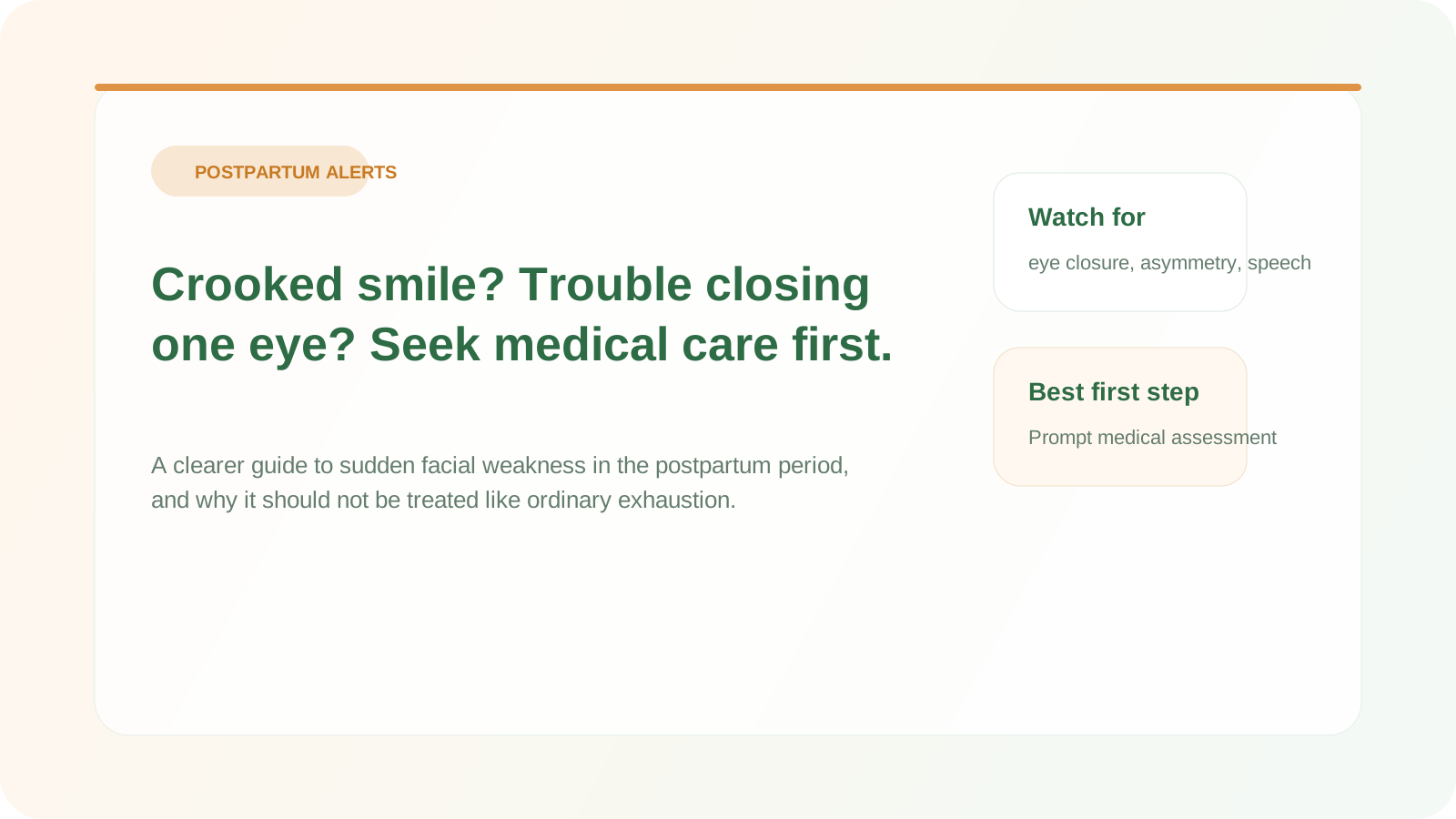
Postpartum life makes it easy to blame unusual symptoms on exhaustion. Many mothers are already sleeping poorly, physically depleted, and trying to keep up with constant demands. But if a crooked smile, trouble closing one eye, or obvious one-sided facial weakness shows up suddenly, that is not something to treat as routine postpartum fatigue.
The first question is not whether it is Bell’s Palsy. The first question is whether it needs medical care now.
Signs that should not be dismissed
These changes deserve prompt medical attention:
- one side of the face suddenly feels weak
- the smile looks uneven
- one eye does not close properly
- water leaks when drinking
- speech or facial control changes noticeably
The more sudden the change feels, the less appropriate it is to simply monitor it at home.
Why postpartum clients delay care
This happens for understandable reasons. People tell themselves:
- I should rest first and see
- I am probably just too tired
- maybe I slept awkwardly
- I need to deal with the baby first
But facial weakness is different from ordinary muscle tension, postpartum soreness, or sleep deprivation. It belongs in a more urgent category of decision making.
When home observation is not enough
If facial changes appear together with anything more complex, the need for medical review becomes even more important. Examples include:
- speech that suddenly sounds different
- swallowing difficulty
- dizziness or limb weakness
- symptoms that seem to be expanding rather than staying isolated
In those situations, the issue is no longer whether a supportive therapy may help later. The issue is making sure nothing more urgent is being missed now.
Why diagnosis comes before supportive care
Even if Bell’s Palsy becomes the working diagnosis, the first stage is still medical. Recovery support belongs later. That timing is what protects people from making decisions in the wrong order.
This is why Bell’s Palsy supportive care should be viewed as recovery-phase support, not as the first action for sudden facial symptoms.
What happens after medical assessment
Once the urgent stage has been addressed, the conversation changes. At that point, people may start asking:
- what recovery may look like
- what should be monitored at home
- whether follow-up support makes sense
- how to fit recovery into postpartum life without creating more chaos
Those are recovery questions. They are important, but they belong after medical review has already happened.
Questions worth answering before you keep searching
If you are still reading because you are unsure what to do, it helps to ask:
- Did the symptom start suddenly?
- Is one side clearly affected?
- Is the eye involved?
- Have you already had medical assessment?
If the answer to the last question is no, then continuing to search for recovery support is usually not the best next step yet.
Why this article matters
Good postpartum health content should not help people rationalize delay. It should help them recognize what should not wait. If this article helps a reader understand that sudden facial weakness is different from ordinary postpartum exhaustion, then it has already done something important.
Professional context
Bell's palsy content needs a more explicitly medical framing than general wellness topics. Supportive care content can be useful, but it should always acknowledge the importance of timely medical assessment and eye protection.
When medical assessment matters first
Sudden facial weakness needs urgent medical assessment, especially because stroke and other neurological causes must be excluded. Early treatment is time-sensitive.
Professional references
- Bell's Palsy (NINDS)
- Bell's palsy (NHS)