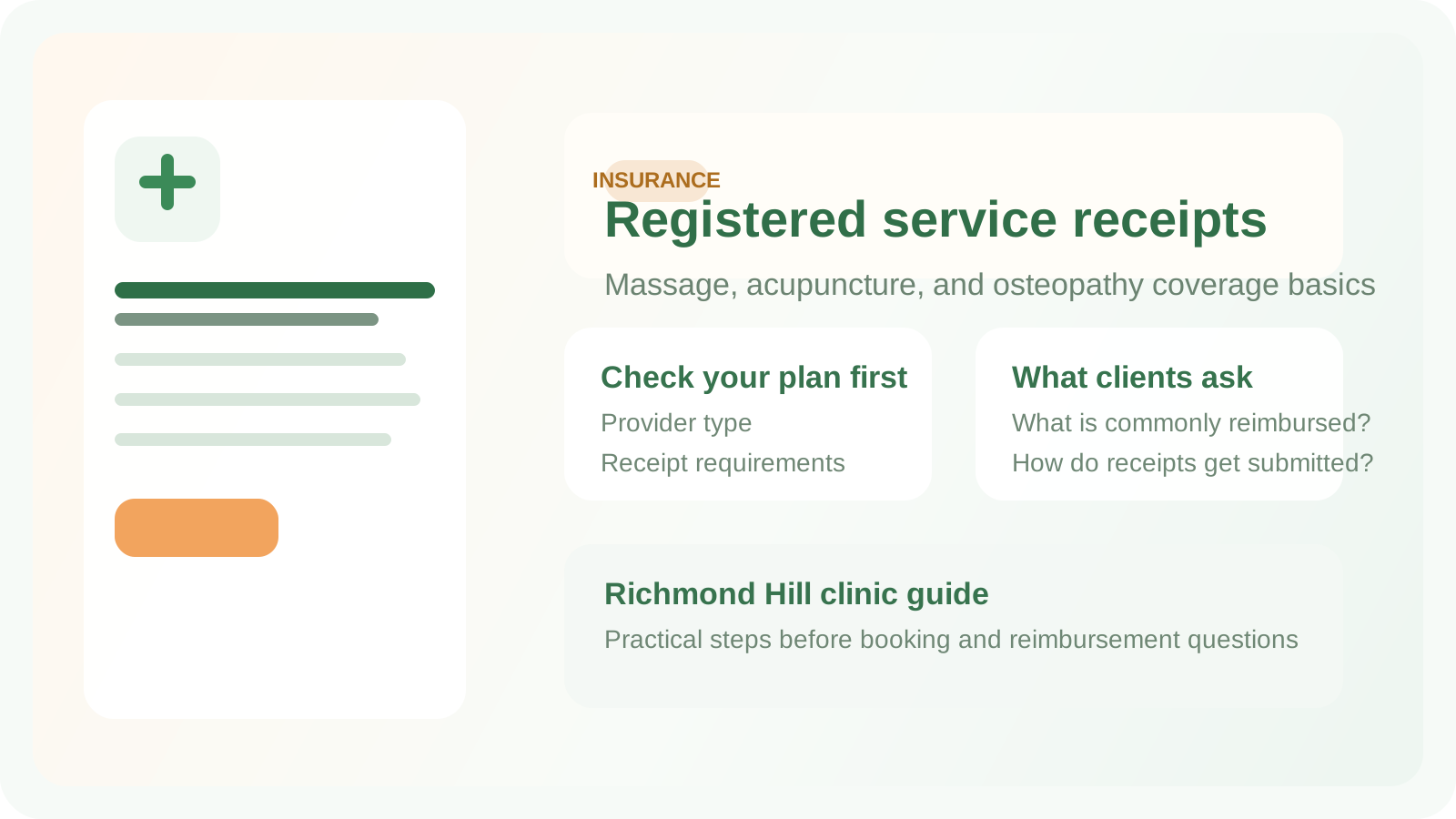
Many clients do not book right away because they are trying to figure out whether their plan may cover part of the cost. The most useful place to start is not guessing which company “accepts” a service, but checking whether your specific plan reimburses a registered provider and what kind of receipt it requires.
Which services are more commonly reimbursed
At Princeton Wellness Centre, the services that are most often connected to reimbursement questions are:
These are usually the strongest fit because many extended health plans list them as recognized categories when they are provided by the appropriate practitioner type. Coverage rules can still vary by yearly maximum, percentage covered, or whether a referral is required.
What your receipt is usually for
When a service is eligible, the clinic can provide an official receipt so you can submit it through your own benefits portal or insurance process. Most clients want to know:
- whether the practitioner type matches their plan
- whether the service category appears in their benefits list
- whether their plan needs extra documents before reimbursement
That is why it helps to check your plan first instead of assuming that every massage, acupuncture, or osteopathy appointment will be treated the same way.
What to confirm before booking
Before your appointment, it is helpful to confirm:
- the exact service category your plan uses
- whether your plan covers registered practitioners only
- whether there is a yearly limit or a per-visit limit
- whether you submit receipts yourself or use a separate benefits process
If you are still comparing services, you can also review the service pages first so you understand whether the appointment itself is the right fit before you think about reimbursement.
If you are unsure which service to choose
Insurance is only one part of the decision. The more important question is whether the service fits your symptoms or treatment goal.
- If your main issue is muscular tension, overuse, or recovery, massage therapy is often the clearer starting point.
- If you are dealing with stress, headaches, sleep concerns, or a broader pattern-based approach, acupuncture may be the better fit.
- If you want more structural, mobility, or hands-on body mechanics support, osteopathy may make more sense.
The simplest next step
If you already know which service you need, you can book online and submit your receipt afterward according to your plan. If you are still deciding between massage therapy, acupuncture, and osteopathy, it is completely reasonable to contact the clinic first and clarify both the service fit and the likely receipt type before booking.
How to decide whether this applies to you
Massage therapy content is most useful for clients trying to make sense of muscular tension, overuse, desk-related strain, stress buildup, and general recovery goals. In practical terms, people usually read these articles when they are asking whether their symptoms feel muscular, whether hands-on work is the right starting point, and whether a shorter relief-focused visit or a broader treatment plan makes more sense. When the discomfort seems linked to stiffness, workload, posture, or body tension that builds through the day, massage therapy is often one of the clearest entry points.
A practical way to read How Insurance Reimbursement Works for Massage, Acupuncture, and Osteopathy in Richmond Hill is to ask not only whether the topic sounds familiar, but whether it matches the pattern, timing, and triggers of your own symptoms. When the daily pattern lines up, the article becomes far more useful as a decision tool rather than just general information.
What a first visit may help clarify
A first massage therapy visit often helps clarify whether the problem is mostly soft-tissue tension, whether stress is amplifying the symptoms, and whether the main goal should be relief, mobility support, or maintenance. That is also where many clients realize that follow-up timing matters more than one single appointment. Some people do best with a short cluster of visits to settle things down, while others need less frequent care paired with stretching, ergonomic adjustments, or activity changes.
That kind of first-visit clarity matters because many people are choosing between more than one service. Once the starting point is clearer, decisions about frequency, duration, and whether to combine care become much easier.
What to think about between visits
Between visits, the most useful self-management steps are often simple: changing how long you stay in one position, reducing repetitive strain where possible, keeping daily movement more consistent, and paying attention to when the tension starts building. Clients also tend to do better when they stop treating pain as only an isolated spot and instead look at workload, sleep, stress, movement habits, and recovery time together.
Small observations often make follow-up care more precise. What time of day feels worst? What activity flares symptoms? What improves after rest, movement, heat, treatment, or sleep? Clients who notice those patterns usually get more value from each visit because the care plan becomes more specific.
Questions worth answering before you book
Before booking, it also helps to decide whether your goal is relaxation, pain reduction, recovery, mobility support, or maintenance. That one choice usually changes what kind of appointment makes the most sense and how you judge whether the visit was useful afterward.
It is also worth asking how long the issue has been present, whether it is changing, and whether there are red flags that make medical assessment more appropriate before any wellness-focused visit. Professional care works best when the first step fits both the symptom pattern and the level of urgency.
Why detailed articles matter
High-quality educational content should make booking easier, not harder. By the time you finish an article like this, you should have a better sense of whether the topic really matches your symptoms, what the first appointment is likely to help clarify, and whether the next action should be booking, comparing another service, or getting medical assessment first.
Professional context
Massage therapy is commonly used for musculoskeletal tension, stress, and recovery support. It can be a reasonable part of a broader care plan, but it does not replace assessment of new, severe, or unexplained symptoms.
When medical assessment matters first
Seek medical assessment first if pain is severe, follows trauma, comes with numbness or weakness, or is paired with chest pain, fever, or other systemic symptoms.
Professional references
- Massage Therapy: What You Need To Know (NCCIH)
- Massage Therapy (Memorial Sloan Kettering Cancer Center)