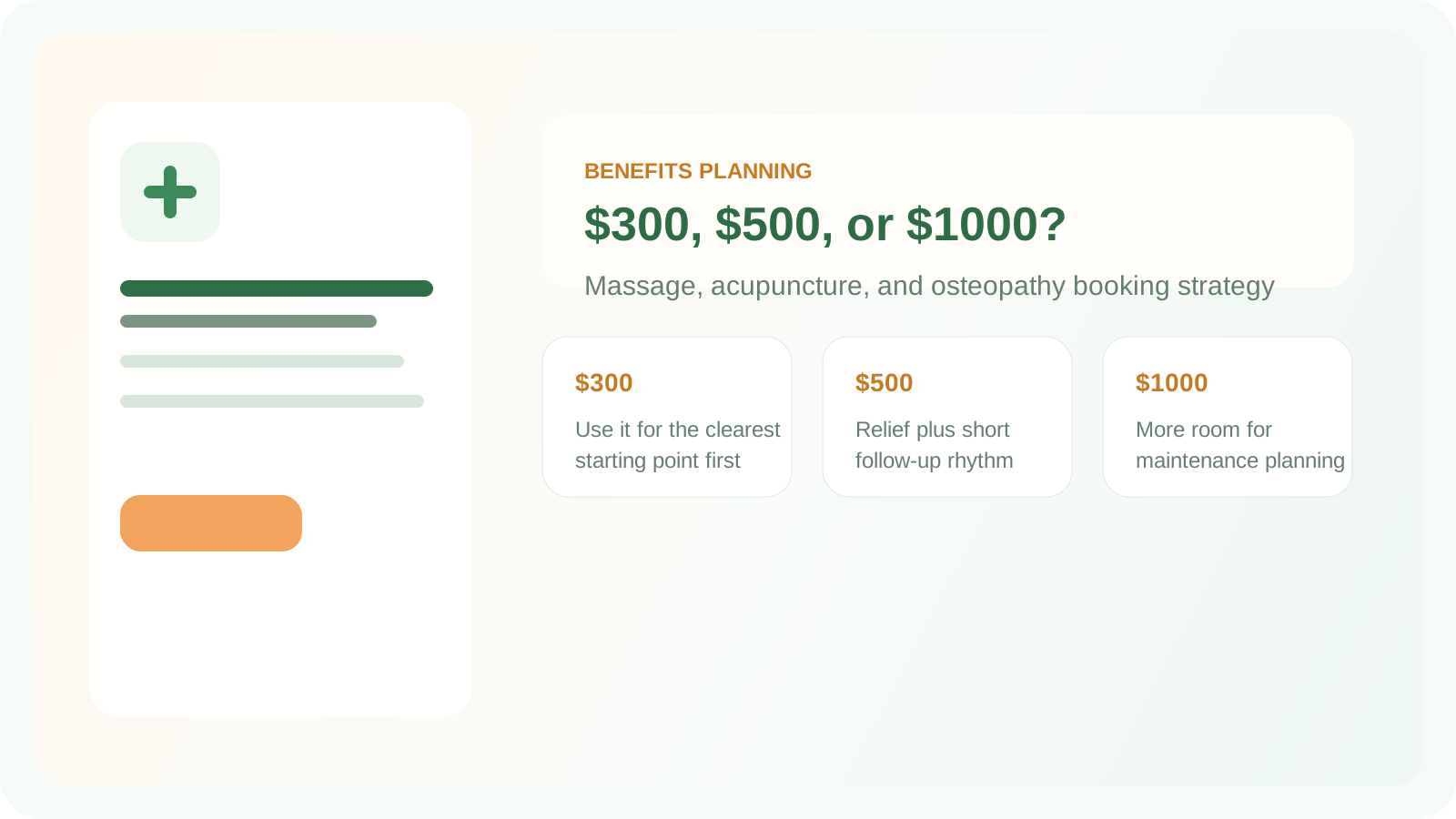
Many clients know they have benefits, but they are not actually sure how to use them well. The real question is usually not whether they can submit a claim at all. It is whether their yearly amount is better used for relief-focused visits, a short cluster of follow-up care, or a more gradual maintenance rhythm.
This article is not making promises about any specific insurance company. Plans vary. Provider rules vary. Reimbursement percentages vary. What this article can do is help you think more clearly about how a common benefits amount may affect real booking decisions.
Start with one important reminder
Not every service should be assumed to reimburse in the same way.
At Princeton Wellness Centre, the services most often tied to reimbursement questions are:
Those are usually the strongest fit for insurance questions because they are the categories many extended health plans recognize when the provider type and receipt details line up with the plan requirements.
Services like hot stone massage, Tuina, ear candling, and some condition-specific supportive bookings may not be reimbursed the same way (or at all) depending on your plan rules and provider category. When in doubt, the practical move is to confirm your plan wording before assuming a claim will go through.
A smaller benefits amount usually needs a more focused plan
If your yearly amount is closer to $300 to $400, the benefits are usually best used where the issue is already affecting your daily life.
That often means:
- neck and shoulder tension that keeps coming back
- lower back strain from desk work or driving
- stress-related body tightness and poor recovery
- movement limitation that is clearly interfering with routine life
At that level, clients often do better by choosing the most likely starting point first instead of trying one visit in every category. A small benefits amount usually works better when you use it to clarify the right direction, settle the most pressing issue, and then decide whether a second or third visit is worth it.
As a rough planning example, our starting prices for 60-minute registered visits are currently shown as from $110 on the massage, acupuncture, and osteopathy service pages. That means a $300 yearly maximum often translates to only a few visits once percentages or per-visit caps are applied.
A mid-range amount often gives room for relief plus follow-up
If your plan is closer to $500 to $800, there is often more flexibility. This is where many clients can think beyond a single visit and consider a short treatment rhythm:
- an initial visit to assess fit
- one or two follow-up visits while symptoms are still active
- a later maintenance visit if the response is useful
This range can feel much more workable when the plan separates massage, acupuncture, and osteopathy into different categories. In that situation, clients sometimes use massage therapy for soft-tissue tension, then look at acupuncture or osteopathy separately if their plan includes those services under another line item.
A larger amount often supports a fuller recovery or maintenance plan
If your coverage is closer to $1000 or more, the biggest advantage is not simply “more visits.” It is that you may have enough room to make better decisions over time instead of feeling pressured to solve everything in one appointment.
That may allow for:
- a more focused early phase when symptoms are most active
- re-evaluating whether the original service is still the best fit
- spacing care out later as maintenance rather than using everything at once
Higher coverage often makes it easier to choose based on need instead of only based on budget pressure.
The reimbursement percentage still matters
Some clients remember the yearly maximum but forget to check whether their plan reimburses 80% or 100%. That difference matters. Even with a strong yearly amount, an 80% plan may still leave part of each visit as an out-of-pocket cost.
It also helps to check:
- whether there is a per-visit cap
- whether the plan only recognizes registered providers
- whether the plan applies a customary or reasonable fee limit
- whether a referral is needed
These details are often what make the real-world cost feel different from the number clients remember from their benefits summary.
How many visits does this usually translate into?
That depends on the service, the provider type, the plan percentage, and whether the plan sets a per-visit cap. But from a planning perspective, here is the more useful mindset:
- a smaller benefits amount usually supports a focused starting phase
- a mid-range benefits amount may support relief plus short follow-up
- a larger benefits amount may support both early care and later maintenance
Trying to estimate your yearly amount in terms of treatment rhythm is often more useful than only asking, “How much money can I claim?”
A practical way to choose between massage, acupuncture, and osteopathy
The service choice still matters more than the benefits number alone.
- If the issue feels mainly muscular, overuse-related, posture-related, or recovery-oriented, massage therapy is often the clearest starting point.
- If stress, headaches, sleep, or regulation-related symptoms are more central, acupuncture may be the better fit.
- If the issue feels more structural, movement-restricted, or compensation-based, osteopathy may be worth comparing first.
When benefits are limited, the smartest use is often choosing the most likely starting point rather than trying every option once.
Common planning patterns for men
These are broad examples, not strict rules. Many male clients are booking for:
- desk-job neck and shoulder tension
- gym or sport recovery that keeps stalling
- driving-related lower back or hip tightness
- body strain that has been ignored until it becomes harder to work around
With a smaller benefits amount, many do better using it on the issue that most clearly disrupts work, sleep, or movement first. With a larger amount, there is more room to combine a short relief phase with later maintenance.
Common planning patterns for women
These are also broad examples, not limits. Many female clients book because of:
- stress-heavy weeks with shoulder and upper-back tension
- fatigue and sleep disruption that start showing up in the body
- postpartum recovery or body strain that feels harder to settle
- recurring discomfort that gets worse around workload or life transitions
When coverage is limited, the most useful move is often choosing the registered service that best matches the current main issue. When the plan is stronger, it becomes easier to support both relief and longer-term upkeep.
When it may be worth using your benefits now
Benefits do not need to be used simply because they exist. But if you have been dealing with recurring stiffness, body tension, stress overload, mobility restriction, or a recovery issue that has lingered for months, then using part of your coverage now may be more worthwhile than continuing to wait.
The best use of benefits is not always the maximum number of claims. Often it is using the right service at the right time, with the right expectation.
Six things worth checking before you book
- whether massage, acupuncture, and osteopathy each have their own category
- whether your plan reimburses 80% or 100%
- whether there is a per-visit limit
- whether a referral is required
- whether you submit receipts yourself or use direct billing elsewhere
- whether your annual amount resets by calendar year or plan year
Why this kind of article matters
Insurance questions often sound simple, but real booking decisions are not. Good educational content should help you think more clearly about service fit, reimbursement limits, and timing before you commit. If this article helps you understand how to use a smaller or larger benefits amount more strategically, then it has already made your next step easier.
Professional context
Massage therapy is commonly used for musculoskeletal tension, stress, and recovery support. It can be a reasonable part of a broader care plan, but it does not replace assessment of new, severe, or unexplained symptoms.
When medical assessment matters first
Seek medical assessment first if pain is severe, follows trauma, comes with numbness or weakness, or is paired with chest pain, fever, or other systemic symptoms.
Professional references
- Massage Therapy: What You Need To Know (NCCIH)
- Massage Therapy (Memorial Sloan Kettering Cancer Center)